
A mixed reality headset crashing in the middle of a video conference, a voice assistant responding off-topic, a robot vacuum stuck under the couch: we’ve all experienced those moments when technological promises clash with everyday life. The high-tech trends of 2024 are not just about spectacular announcements on stage. They are measured by what we can actually plug in, set up, or use at home or in the office.
European AI Regulation: What Changes for Tech Products
When purchasing a tool powered by artificial intelligence, we rarely think about regulation. In 2024, this topic becomes hard to ignore. The Regulation (EU) 2024/1689 on artificial intelligence was published in the Official Journal of the EU on July 12, 2024, and came into effect on August 1, 2024.
The implementation timeline is staggered, and this is where it matters for users and manufacturers. Starting February 2, 2025, AI systems deemed to pose “unacceptable” risks are banned: mass biometric surveillance, behavioral manipulation, social scoring. By August 2, 2025, the rules apply to general-purpose AI models, those that power chatbots, writing assistants, and image generators found in dozens of consumer products.
For brands developing connected gadgets or software incorporating AI, this means transparency obligations from the product design stage. A device sold in France must clearly indicate when content is generated by AI. For us, the users, this is crucial information that has been sorely lacking, especially on video creation platforms and photo editing tools.
Regular updates on these regulatory developments and their impact on everyday products can be found on the DigiGeekfr high tech website, which contextualizes these announcements for a French-speaking audience.
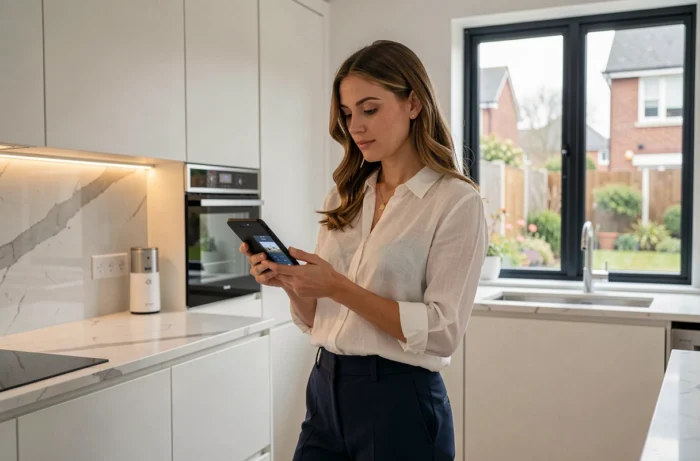
Generative AI in Business: Beyond the Hype, Practical Uses That Stick
We’ve all tried a text or image generator in 2023. The question in 2024 is which uses survive beyond initial curiosity. According to the McKinsey report “The State of AI in 2024,” the adoption of generative AI has significantly increased in businesses, but its impact on profits remains limited.
On the ground, feedback varies on this point. Some marketing teams use generative models daily to produce variations of advertising visuals or drafts of newsletters. Others have abandoned them after a few weeks due to lack of seamless integration with their existing tools.
Three Use Cases That Are Stabilizing
- Automatic report generation from audio recordings of meetings, with systematic human review before distribution
- Assistance in code writing for developers, speeding up prototyping phases without replacing manual code review
- Creation of synthetic data to train internal models, thus avoiding privacy issues related to real customer data
What distinguishes teams that keep these tools from those that abandon them is rarely the technology itself. It’s the presence of an internal person who sets the prompts, cleans the results, and trains colleagues. Without an AI reference point, the tool ends up in a digital drawer.
Domestic Robots and Connected Objects: What Really Works in Daily Life
The robot vacuums showcased at CES 2024 now feature vision-based navigation systems, with cameras and sensors that map the environment in real-time. The promise: no more finding the device stuck between two chair legs.
In practice, high-end models deliver on this promise on clear surfaces. On cluttered floors (toys, cables, shoes), performance drops. Technology is advancing, but the layout of the home remains the primary performance factor for a domestic robot.
Health Connected Objects: The Personal Data Shift
CES 2024 confirmed a strong trend towards health sensors integrated into everyday objects. We’re talking about connected rings measuring heart rate variability, mirrors analyzing skin condition, and mattresses monitoring sleep quality.
The question now is no longer technical but regulatory. With the AI Act and GDPR combined, manufacturers will need to clarify the use of health data collected by these devices. A heart rate sensor integrated into a watch does not fall under the same framework as a certified medical device, and the boundary between the two is blurring.
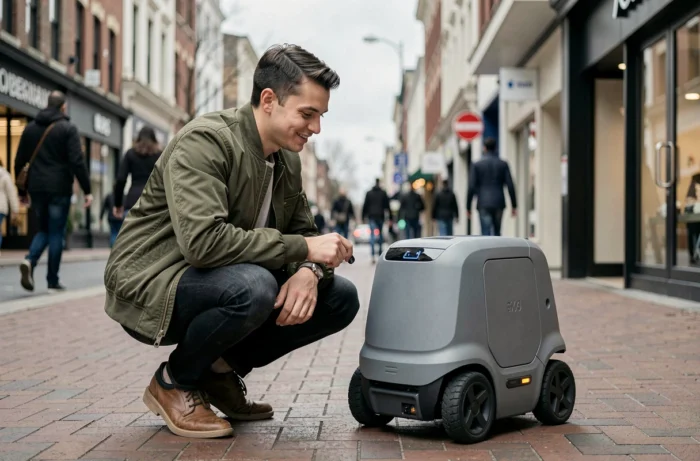
Transparent Screens and Gesture Interfaces: Gadgets or Real Tools?
Transparent screens were among the most photographed products at CES 2024. We can already imagine them in store windows, as office dividers, or as kitchen displays layered over windows. The visual rendering is impressive.
Operationally, the constraints are real. Ambient brightness significantly reduces readability. The contrasts remain low compared to a standard OLED screen. For professional use (displaying real-time data in a showroom, for example), the technology holds up. For watching a video in your living room, it falls short.
Contactless gesture interfaces follow a similar trajectory. Hand movement detection is improving, but muscle fatigue limits prolonged use. Raising your arm for ten minutes to navigate a menu is less efficient than a simple touchscreen.
- Transparent screens find their place in retail and events, but not yet in homes
- Gesture commands work for brief interactions (validation, scrolling), not for continuous work
- The hybridization of gesture, voice, and touch will likely be the model that prevails, rather than a single interface
The high-tech trends of 2024 share a common point: technology itself is no longer the bottleneck. Regulation, integration into existing habits, and management of personal data determine which products will remain on our desks in two years and which will end up at the back of a closet.