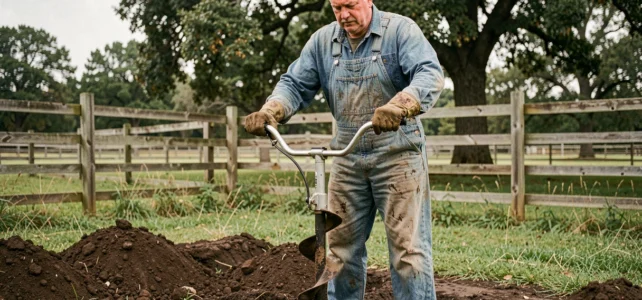
A gas-powered auger is a portable drilling tool equipped with a gasoline engine (two-stroke or four-stroke) that drives a helical bit to bore holes in the ground. Its use includes fence installation, tree planting, post setting, or creating light foundations. Before investing, several technical parameters deserve close examination, as poor sizing can turn the expected time savings into a physical chore.
Engine Torque and Soil Type: The Criterion That Product Sheets Hide
Most technical sheets display the power in watts. This figure gives an indication of the rotational capacity, but the torque at the crankshaft determines the actual drilling capacity in compact soil. An engine that develops a lot of watts at high speed can stall as soon as it encounters a dense clay or rocky layer.
For loose soil (topsoil, sand), a modest displacement engine is sufficient. However, clay soil or ground that hasn’t been worked for years presents significantly greater mechanical resistance. In this case, opt for a higher displacement and ensure that the manufacturer specifies the maximum torque, not just the peak power.
A good reflex is to carefully choose a gas auger by cross-referencing the nature of your terrain with the engine’s technical sheet, rather than relying solely on the advertised wattage.
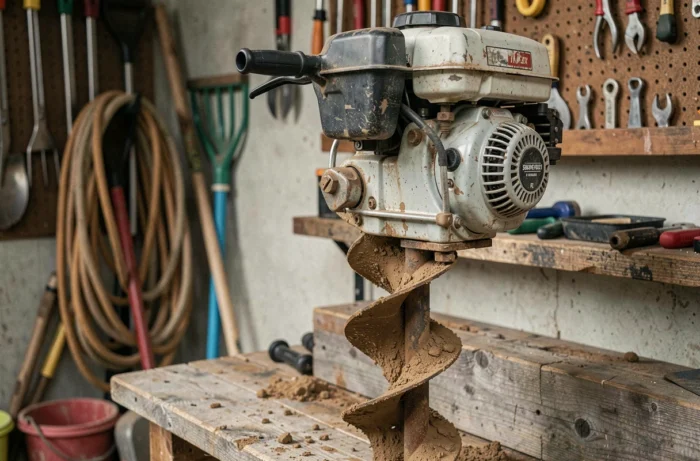
Bit Diameter and Compatibility: Anticipating Future Uses
The diameter of the bit determines the size of the hole drilled. Planting a fruit shrub does not require the same diameter as setting a gate post or pouring a concrete footing. An auger that accepts multiple bit diameters protects your investment in the long term.
Check the coupling system between the bit and the engine’s output shaft. Some models use a standard fitting that allows the mounting of bits from different brands. Others impose a proprietary system, which limits choice and increases the price of accessories.
- For planting hedges or small plants, a reduced bit diameter (below 150 mm) covers most needs.
- For setting fence posts or poles, an intermediate diameter (between 150 and 200 mm) offers a good compromise between hole size and physical effort.
- For foundation work or large posts, a wide diameter (beyond 200 mm) becomes necessary but requires a powerful engine and often the use of two operators.
Weight, Handles, and Kickback Management
A gas auger is heavy. When the bit catches a root or stone, the engine’s torque is transmitted abruptly to the handles. This phenomenon, called kickback, can cause violent twisting of the wrists or torso.
Recent models incorporate an automatic disengagement system that cuts the transmission as soon as the resistance exceeds a threshold. This mechanism reduces the risk of injury and also protects the bit. If you are working alone, this device shifts from being an option to a necessity.
The shape of the handles plays a direct role in fatigue. Anti-vibration handles absorb some of the oscillations from the two-stroke engine. On a job site with several dozen holes (fence installation on a long plot), the comfort difference between rigid handles and cushioned handles is felt from the first hour.
Solo Use or Two Operators
Lightweight augers designed for a single user are suitable for regular gardening tasks. For large diameter bits or difficult soils, a two-operator auger distributes the effort and stabilizes the device during drilling. The choice depends as much on the type of soil as on the frequency of use.
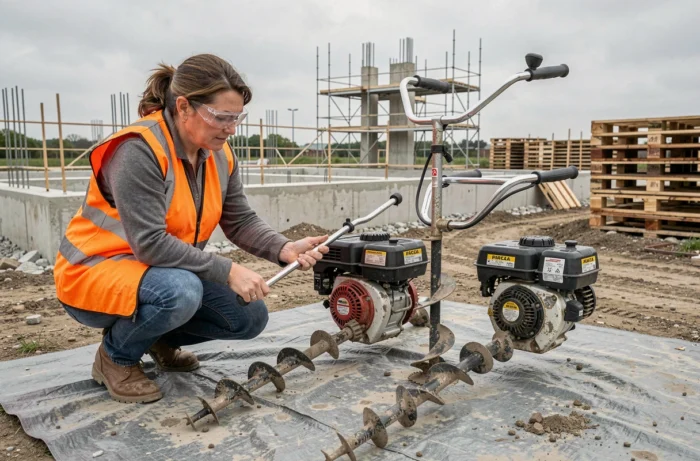
Maintenance of the Two-Stroke Engine and Tool Longevity
The two-stroke engine that powers the vast majority of gas augers operates with a gasoline-oil mixture. An approximate dosage of the mixture shortens the lifespan of the piston and cylinder. Adhering to the ratio indicated by the manufacturer (often engraved on the fuel cap) remains the first rule of longevity.
Some regular maintenance points extend the machine’s lifespan:
- Clean the air filter after each drilling session, especially in dusty soil. A clogged filter enriches the mixture and causes the engine to overheat.
- Check the spark plug condition every few uses. A black or wet spark plug indicates a carburation problem.
- Grease the coupling between the engine shaft and the bit to prevent seizing and facilitate bit changes.
- Drain the fuel if the machine remains unused for more than a few weeks. The gasoline-oil mixture degrades and clogs the carburetor.
Regular maintenance of the two-stroke engine prevents most breakdowns encountered on gas augers after two or three seasons of use.
Gas Auger or Battery-Powered Electric: Where to Draw the Line
In recent years, battery-powered electric augers have gained ground in gardening catalogs, especially for modest bit diameters. They offer silent operation, no direct emissions, and instant starting without a starter.
Their limit remains the power available in hard soils. For residential gardening use on loose ground, a battery auger may suffice. For heavy or frequent work, the gas engine retains a clear advantage in autonomy and drilling torque.
Some municipalities and public contractors are now directing their tenders towards non-fossil landscaping equipment as part of decarbonization policies. This trend could, in the long term, reduce the supply of small gas engines for landscaping professionals working on public contracts.
The choice between gas and electric boils down to three variables: soil hardness, target drilling diameter, and frequency of use. On these three criteria, the gas auger remains the default choice as soon as the terrain or project exceeds the scope of light gardening.