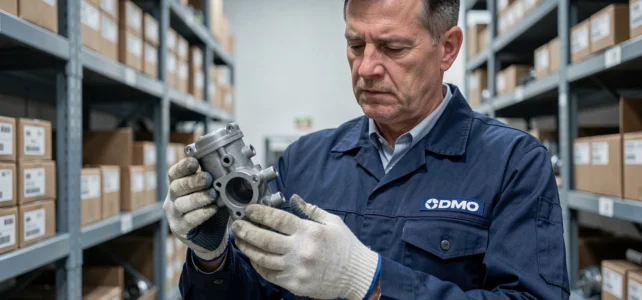
On a an SDMO generator, the reference of a part is no longer sufficient to guarantee that the correct component will be found. Since the brand’s integration into the Rehlko ecosystem (formerly Kohler), parts catalogs are gradually migrating to a new nomenclature. Searching solely under the SDMO name means missing out on a portion of the available stock.
Rehlko Nomenclature and SDMO Cross References: Avoiding Blind Spots
The change in commercial name from Kohler to Rehlko has direct consequences on the search for parts. Recent product sheets now display the mention REHLKO (KOHLER – SDMO) ORIGINAL with an OEM code distinct from the old SDMO reference. An oil filter or a fault sensor may exist under two or even three references depending on the manufacturing period of the generator.
We recommend systematically cross-referencing the search with the three terms: SDMO, Kohler, and Rehlko. On specialized platforms, the combined query brings up results that each isolated term does not cover. This habit prevents ordering an adaptable part when the original is in stock under a different label.
Distributors that explicitly display the OEM code and the mention “original spare parts” allow for traceability verification before purchase. This is a more reliable sorting criterion than price or delivery time. When searching for spare parts for SDMO generators, this level of detail on the product sheet indicates a supplier who understands the correspondence between old and new references.
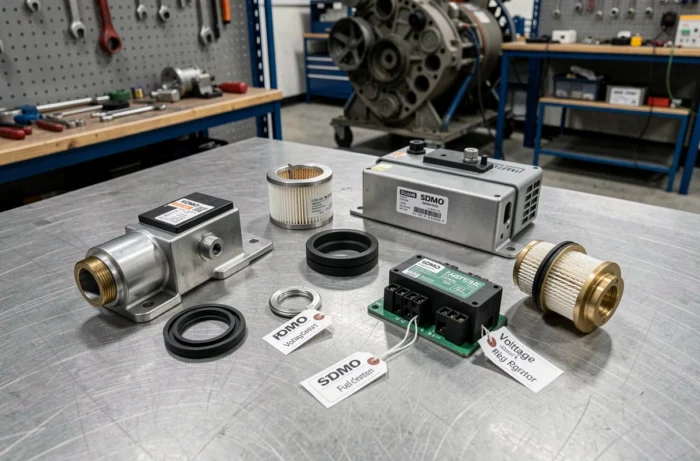
Filters, Regulators, Sensors: Identifying the Right Family of Parts for Your Generator
SDMO generators cover a wide range, from portable diesel construction units to backup sets of several hundred kVA powered by Perkins or Mitsubishi engines. The engine family determines the scope of compatible parts much more than the model of the generator itself.
An SDMO R110C3 equipped with a Perkins block shares no consumables with a portable model powered by Kohler. Confusion is common in general search results, where category filters mix pump accessories and diesel generator parts.
Three Checks Before Any Order
- Record the nameplate of the generator AND that of the engine. The engine serial number is the key to entering the OEM catalog of the engine manufacturer (Perkins, Mitsubishi, Kohler).
- Check if the part concerns the engine section (filter, injector, belt) or the alternator/regulation section (AVR, fault sensor, contactor). The supply channels are not the same.
- Compare the OEM code displayed on the product sheet with the one engraved or printed on the part to be replaced. A difference of just one character can indicate an incompatible component.
In the area of electrical regulation, original SDMO parts are often manufactured by third-party equipment manufacturers (Leroy-Somer for alternators, for example). Searching for the subcontractor’s reference sometimes opens a supply channel faster than the SDMO/Rehlko circuit.
Original Parts, Adaptable Parts, and Counterfeits: What OEM Traceability Changes
A part without a verifiable OEM code is an assumed technical risk. On backup generators, a non-compliant fault sensor can cause an unexpected trigger or, worse, a failure to trigger in a real situation. The reliability of the part conditions that of the entire installation.
Adaptable parts have their place on common consumables (filtration, belts) as long as the adaptable manufacturer communicates its technical specifications. However, for regulation, starting, or safety components, we observe that resorting to the original remains the norm in industrial maintenance contracts.
Counterfeiting also affects this market. A counterfeit fuel filter often has insufficient filter media weight, allowing particles capable of damaging injectors to pass through. Checking the consistency between the packaging, the marking of the part, and the OEM code from the catalog remains the safest way to rule out copies.
Real-Time Availability and Delivery Time: A Neglected Criterion for Backup Generators
A backup generator immobilized by a missing part represents a regulatory and operational risk. Public establishments, data centers, and hospital sites operate under obligations to restore service within a constrained timeframe.
Specialized suppliers now offer a real-time availability check before order validation. This process avoids the classic scenario: order validated, payment received, then notification of stock shortage three days later.
For critical parts (automatic start module, voltage regulator, control board), maintaining a small buffer stock on-site remains the best assurance. The storage cost of an AVR or an oil pressure sensor is negligible compared to that of prolonged unavailability of the generator.
Preventive Maintenance and Anticipation of Replacements
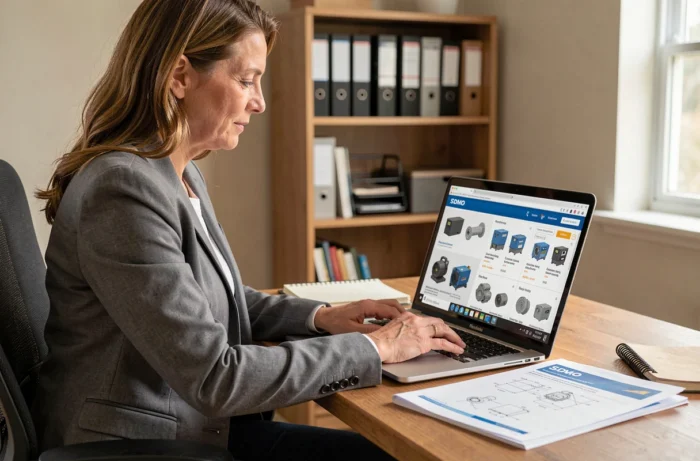
A structured maintenance plan allows for anticipating orders for filters, belts, and engine consumables before a failure occurs. On a regularly operated SDMO diesel generator, replacement intervals are dictated by the engine manufacturer, not by SDMO. Consulting the Perkins or Mitsubishi documentation according to the installed block provides more precise replacement thresholds than the general manual of the generator.
Ordering consumables in bulk reduces the unit cost and the number of deliveries. Specialized distributors often offer maintenance kits that include oil filter, fuel filter, and air filter for a given model.
Furthermore, the European regulatory trend is pushing towards extending the availability of parts and better acceptance of parts from the circular economy. For operators of older SDMO generators, this evolution could facilitate access to certain components that are currently difficult to source new.