The rustic wedding bow tie is no longer just about choosing a color that matches the bouquet. Feedback from tailoring workshops specializing in outdoor ceremonies shows that the consistency between the fabric of the bow tie, the cut of the suit, and the venue has a greater impact on the final look than the pattern itself. Understanding this textile logic helps avoid the most common pitfall: an accessory that is too formal and clashes with a countryside vibe.
Fabric texture and outdoor wear: the criteria that fashion guides overlook
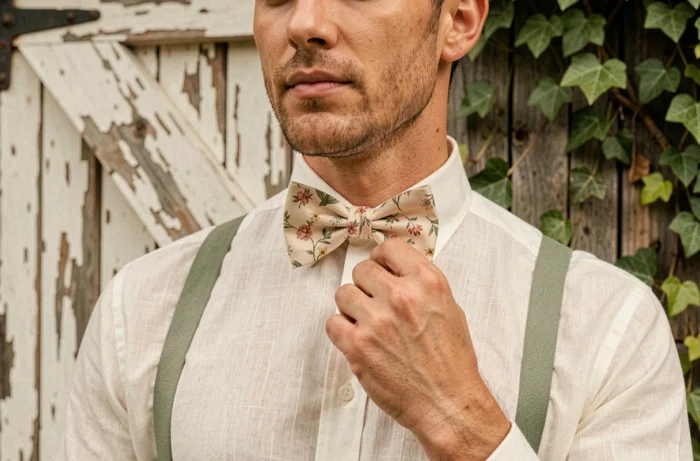
The choice of material influences the appearance of the bow tie much more than the color. A satin or smooth silk bow tie reflects a shine that visually conflicts with a wrinkled linen or textured cotton suit, typical of rustic style.
Workshops that handle weddings in Gironde and other rural areas report a clear preference for fabrics with visible grain: linen, linen-wool blends, cotton-wool. These materials absorb light rather than reflect it, making them more consistent outdoors, under direct natural light.
A rustic suit in beige linen or sage green cotton calls for a bow tie in a similar material. The practical rule: if the suit fabric has visible irregularities to the touch, the bow tie should have them as well. To learn more about Hucky, the choice of fabric directly influences the harmony between the bow tie and the entire outfit.
Sage green, terracotta, and warm browns: beyond classic beige
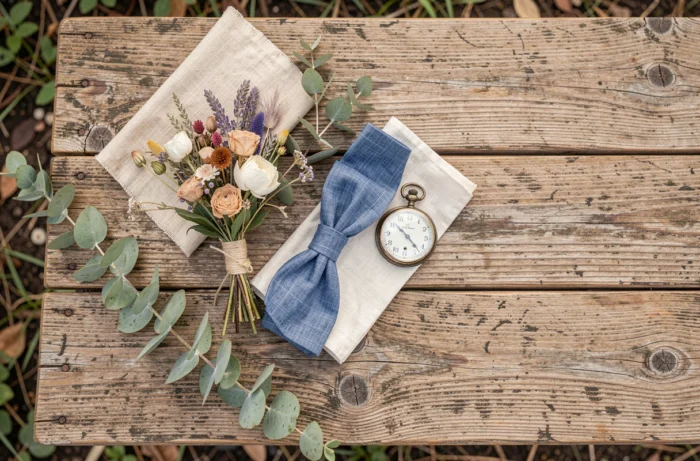
Beige and ecru have long dominated rustic weddings. The palettes observed in 2026 at bespoke suit workshops show a clear departure from this. Sage green, terracotta, and warm browns have emerged as the key tones for outdoor ceremony suits.
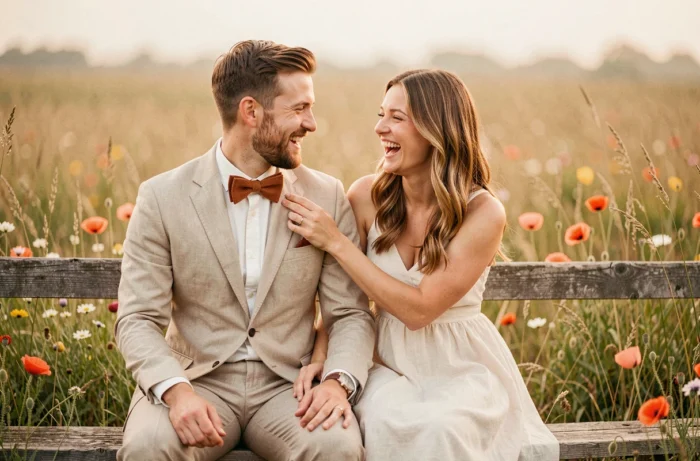
This evolution directly impacts the bow tie. Liberty patterns in these color ranges work particularly well because they add visual complexity without falling into overly pronounced fancy. A terracotta bow tie with a micro-floral pattern on a warm brown suit creates a continuity that a classic plain beige bow tie does not.
Combinations to avoid with these new palettes
The common pitfall is trying to exactly match the color of the suit with the bow tie. A bow tie identical to the suit’s tone flattens the silhouette. The bow tie should contrast slightly while remaining within the same color family. A sage green suit pairs better with a bow tie in a deeper green or a complementary brown than with an identical sage green.
The combination of burgundy with these earthy palettes is debated among tailors. Some consider it too autumnal for a summer wedding, while others find it coherent if the rest of the accessories (pocket square, boutonniere) temper the warmth of the ensemble.
Groom and groomsmen bow ties: coordinating without uniformity
The approach of dressing the groom and his groomsmen in the same bow tie creates a group effect that can sometimes be too rigid. Couples seeking a personalized ceremony now prefer coordination by fabric family or palette, rather than by identical model.
In practice, this translates to configurations like:
- The groom wears a textured linen bow tie with a subtle pattern, in the dominant color of the theme
- The groomsmen wear a bow tie in the same fabric (linen), but solid, in a complementary shade
- The secondary accessories (suit pocket square, boutonniere) create the visual link between the two groups
This approach avoids a uniform effect while maintaining photographic coherence. In group shots, the coordination remains clear without each person appearing to wear a matching costume.
The question of format according to morphology
A often overlooked point: the width of the bow tie should match the build of the wearer. A slim bow tie on a broad-shouldered man looks disproportionate. Conversely, a wide bow tie on a narrow face overwhelms the features.
For a group of groomsmen with varied builds, two different formats in the same fabric yield better results than a single format imposed on all. This detail requires a bit more organization in advance, but the outcome in group photos justifies the effort.
Pre-tied bow tie or self-tie: a practical, not aesthetic choice
The debate between pre-tied and self-tie bow ties comes up consistently. The distinction is less aesthetic than one might think. A quality pre-tied bow tie in a textured fabric works very well in a rustic context. The slight asymmetry of a hand-tied bow is only visible up close.
The real criterion for choice is practical: an outdoor wedding involves wind, heat, and movement. A pre-tied bow tie stays in place all day without adjustment. A hand-tied bow may loosen over the hours, especially with a soft linen shirt collar.
For grooms who value the act of tying, tailors recommend practicing at least ten times before the big day. The self-tie bow tie requires a skill that cannot be improvised on the morning of the ceremony.
- Pre-tied: stability, time-saving, suitable for groomsmen who do not master tying
- Self-tie: slightly more natural appearance, requires practice, risk of loosening outdoors
- Wood or rigid material bow: strong visual effect, but limited to very casual outfits and unsuitable for structured suits
The rustic bow tie works when it extends the textile logic of the suit rather than overlaying it as an isolated decorative element. Consistent fabric, complementary palette, format suited to morphology: these three parameters matter more than the brand or price of the accessory. The rest is a matter of personal taste, and that is precisely what makes each rustic wedding different from the last.