Autumn fashion 2026 is not just about a color palette or a list of items to buy. The European regulatory framework is reshaping the rules of the game, and current collections are already marked by these constraints. Understanding fashion trends today means simultaneously reading the runways and the legal texts.
European Regulation and Impact on Fashion Collections 2026
Since July 19, 2026, the European Union has banned the destruction of unsold textiles for large companies. This measure forces brands to rethink their production volumes, distribution circuits, and end-of-line processes. Resale, donation, repair, and re-circulation: alternatives to stock elimination are becoming the operational norm.
At the same time, the digital product passport (DPP) is entering its active infrastructure phase. Specific textile obligations will arrive later, but brands that anticipate gain a real competitive advantage. The DPP will make material data, production chain traceability, and the reparability of each garment visible.
Another lever for transformation: the end of the “de minimis” customs threshold of 150 euros for non-European small packages, effective since July 1, 2026. Ultra-fast fashion platforms outside the EU are seeing their import prices rise. For those who wish to explore fashion with Style Papers, this regulatory context helps to understand why durable and traceable pieces are taking precedence over cheap disposables.
We observe that future ESPR requirements (durability, reparability, recyclability) are already influencing collection decisions. Circularity is no longer a marketing argument; it is a legal framework.
Trendy Colors and Materials: What the Runways Convey
Burgundy, lime green, and sky blue are emerging as the season’s key colors, breaking away from the usual beiges and browns of autumn. These saturated shades reflect a stylistic shift towards visual assertion rather than neutrality.
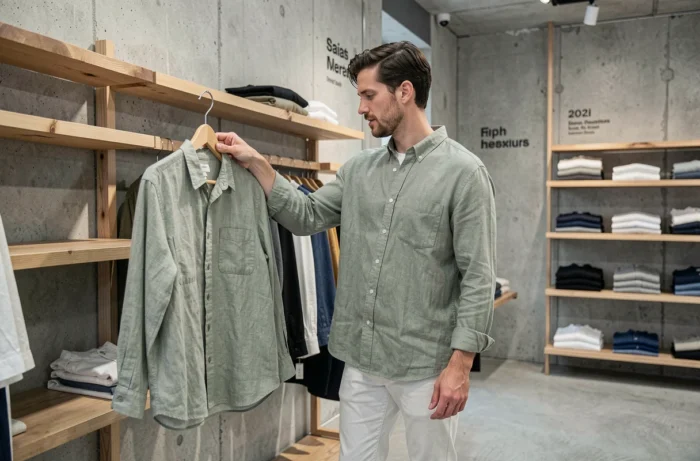
On the materials side, regulatory constraints are pushing brands to prioritize fabrics with traceable compositions and recyclable designs from the outset. Complex synthetic blends, which are difficult to recycle, are declining in the collections of houses that anticipate the DPP.
Three Color Directions to Assert Your Style
- Saturated tones (burgundy, orange, olive green): they work as strong statement pieces, worn with neutral basics to avoid color overload
- Cool blues (sky, lavender): ideal for layering, they add depth to a structured wardrobe without falling into childish pastels
- Bright yellow: reserved for accessories or a statement piece, it requires a sharp cut to remain legible
We recommend choosing one or two strong colors per outfit. The accumulation of saturated shades creates visual noise that dilutes style instead of asserting it.
Structured Pieces vs. Oversized Volumes: The Real Fashion Trade-off
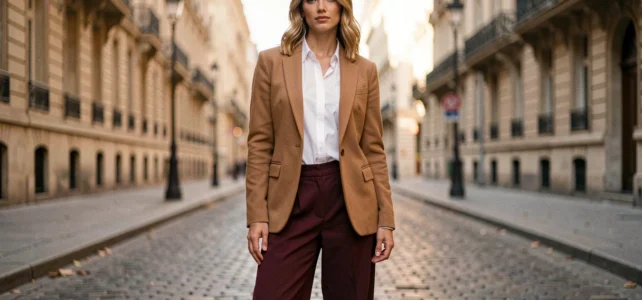
The men’s wardrobe borrowed by women and oversized cuts dominate the runways. The structured wide-leg pant, with a marked waist and ample fall, embodies this tension between comfort and precision. The flowing long dress, worn from Loewe to Saint Laurent, extends the same logic: controlled volume, not blur.
Volume without structure creates a neglected effect, not a fashionable one. The difference lies in the finishes: sharp seams, thin belts, placed shoulders. A wide pant with a clean hem and well-positioned dart is not the same as a pant that is simply too large.
Fashion Accessories: Less Quantity, More Precision
Expressive accessories (brooches, sculptural jewelry, geometric-shaped bags) replace accumulation. A strong accessory piece is enough to anchor an outfit. Glasses, in particular, are becoming a true style element and not just a functional accessory.
Streetwear incorporates this same demand for precision. Monochrome sneakers and fitted technical jackets are gradually replacing oversized logo pieces. Style assertion comes from the coherence of proportions, not from the multiplication of signals.

Building a Sustainable Wardrobe Without Sacrificing Style
The question is no longer “which trendy piece to buy” but “which piece will withstand the next seasons while remaining relevant.” Upcoming ESPR regulations on durability and reparability will make this approach not only desirable but mandatory for brands.
Specifically, three criteria allow filtering a fashion purchase today:
- Is the material composition simple (mono-fiber or bi-fiber maximum)? A garment that is easy to recycle is more likely to remain available in the second-hand market
- Is the cut sharp enough to survive a seasonal trend change? Structured pieces age better than effect pieces
- Does the brand communicate about the traceability of its production chain, or does it settle for an “eco-responsible” label without verifiable data?
A traceable and well-cut garment remains the best definition of sustainable style. Trends come and go, but the fundamentals of cut and material remain. The European regulatory framework will simply make this obvious truth harder to ignore for both brands and consumers.