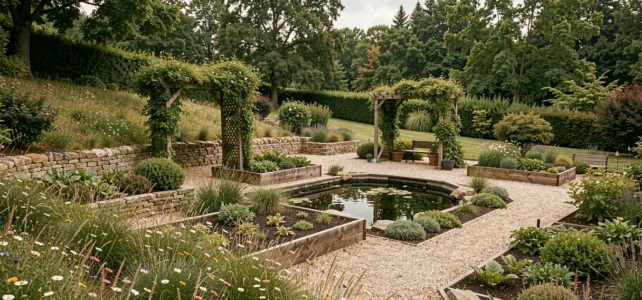
A sloping plot, clay soil that retains water, a south-facing exposure with not a single tree: each outdoor space imposes its constraints. Designing a natural garden means starting from these realities to create a living space that requires little maintenance. Here are ten concrete ideas, tested in the field, to transform your outdoor area into a space that is both aesthetic and resilient.
We are relying here on trends observed since 2024, notably the rise of dry gardens and flowering meadows, two approaches that redefine what is expected from a natural outdoor design.
1. Flowering meadow sown directly on poor soil
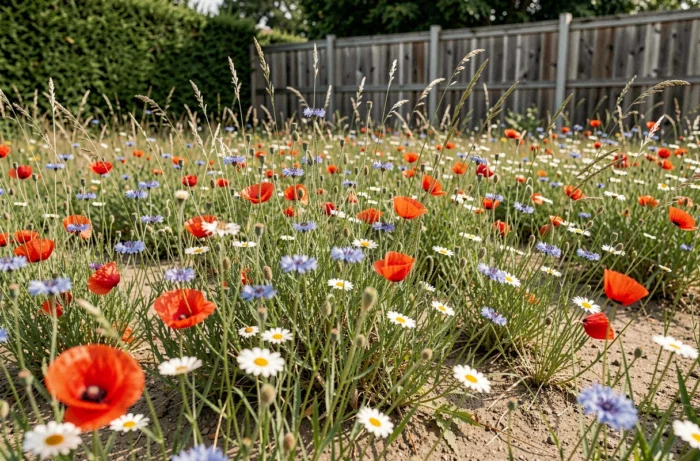
On an ungrateful plot (chalky, stony, dry), the flowering meadow performs better than grass. A sowing of a mix suited to your region provides an extended flowering from March to October without watering or fertilizers once the meadow is established. It reaches full maturity in two to three years.
The work focuses initially: we scratch the soil a few centimeters, sow by broadcasting, and roll. After that, a single late mowing per year is sufficient. For those looking for guidance on design on L’Esprit Nature, the flowering meadow is an accessible starting point even without gardening experience.
2. Dry garden with mineral mulch and Mediterranean perennials
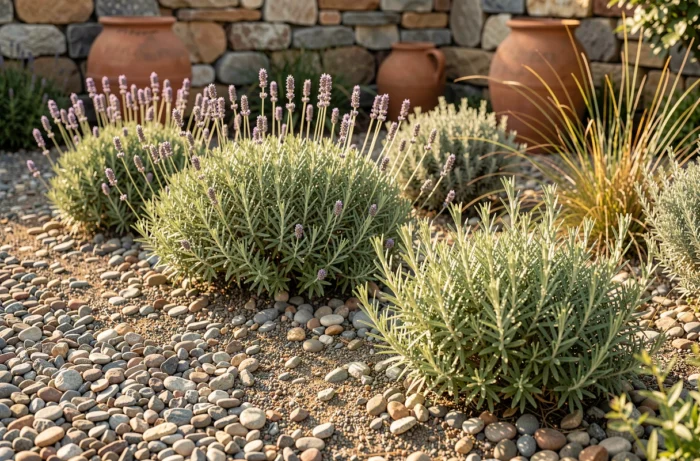
The dry garden emerges as the practical response to increasingly frequent watering restrictions in summer. We replace the lawn with a mulch of local gravel and plant resilient perennials: lavender, santolina, yarrow, blue fescue.
No regular watering after the first year of installation. Feedback varies on the exact acclimatization period depending on the soils, but the principle remains the same: allow the plants to develop a deep root system before cutting off the water.
3. Mixed country hedge to structure without fencing
Since the joint instruction of July 2026, a unified national regime governs hedge management in France, with a dedicated departmental office. Planting a hedge remains encouraged, but its destruction is now subject to compensation coefficients.
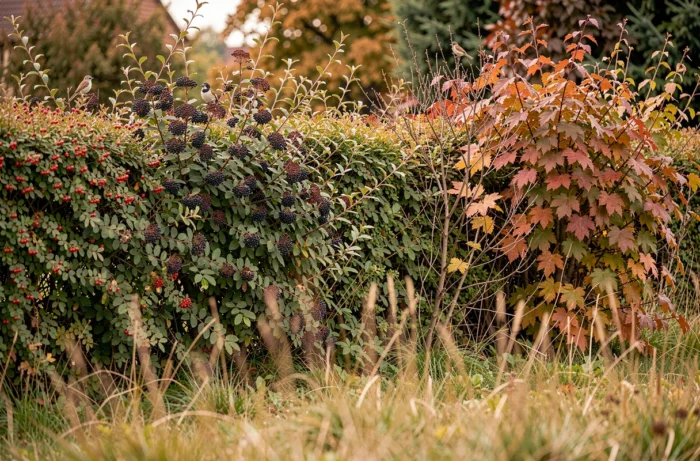
A mixed hedge is composed of five to seven local species (dogwood, hazel, privet, hawthorn) to create a natural structure that serves as a refuge for wildlife. Pruning is prohibited between early April and late July to protect nesting. This schedule conditions all maintenance planning.
4. Dry stone wall as a relief element
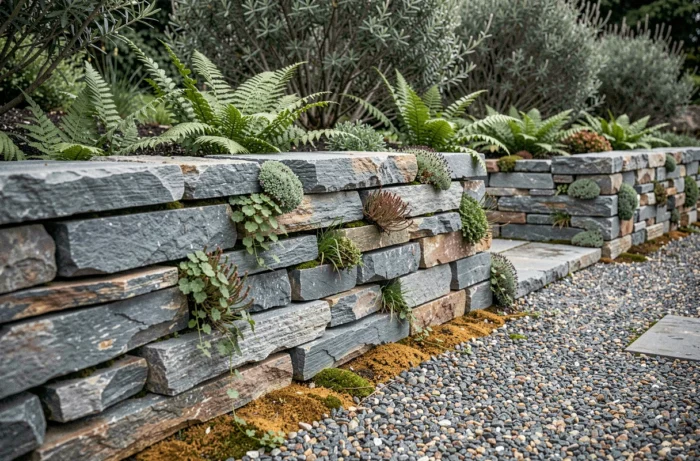
A sloping plot or a flat garden without character gains a lot from a dry stone wall. No mortar: we stack local stones while respecting the fruit (slight backward tilt) for stability.
This wall creates microclimates. Lizards settle there, and sedums colonize the joints. It is a sustainable installation that requires no maintenance and ages well, unlike concrete borders.
5. Raised bed vegetable garden on poor soil
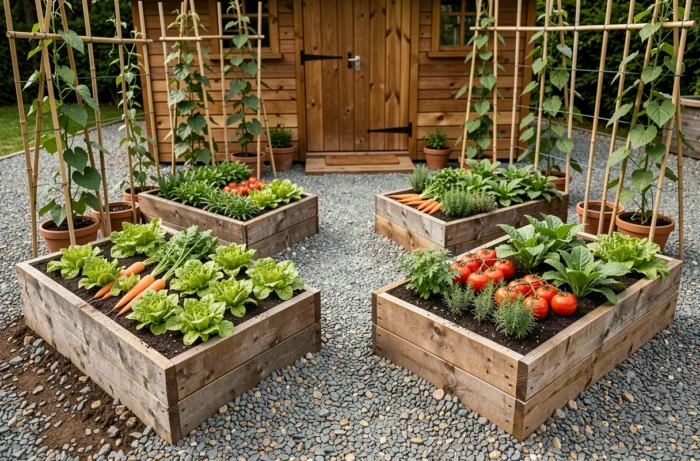
When the soil is too compact or polluted, raised wooden beds allow for above-ground cultivation. We fill them with topsoil mixed with homemade compost and plant closely to limit weeding.
Untreated wood (chestnut, larch, douglas) lasts between eight and fifteen years without rotting. We place the beds near the kitchen for quick access to herbs and everyday vegetables.
6. Natural pond without pump or chemicals
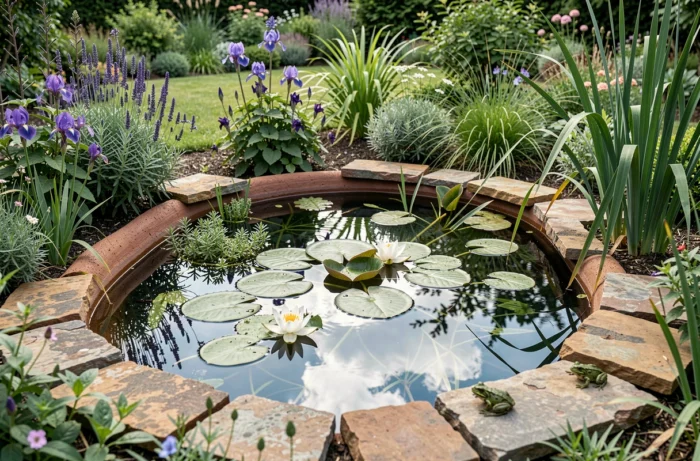
Fountains and natural ponds are making a comeback in French gardens. A small pond (a few square meters) with a planted lagoon area of reeds and water irises ensures biological filtration without an electric pump.
The balance takes a few months to stabilize. We avoid fish initially to allow the microfauna to settle. Water input is limited to compensating for summer evaporation.
7. Japanese stepping stones in natural stone to connect areas
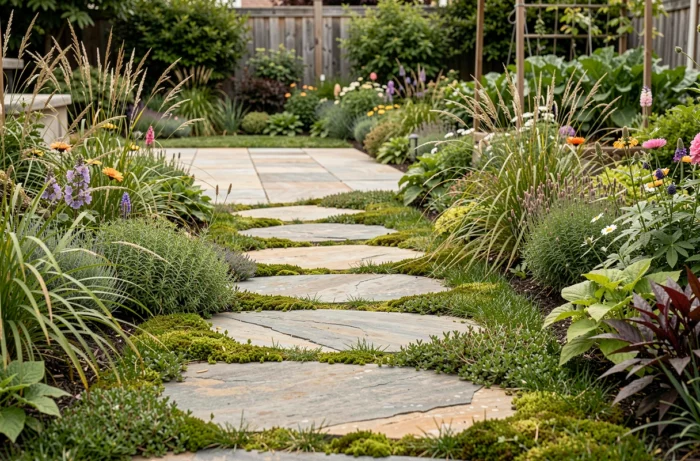
Rather than pouring a concrete path, we lay natural stone slabs spaced in the lawn or gravel. Each slab rests on a bed of compacted sand.
This path guides passage without sealing the soil. Rainwater infiltrates between the stones, preventing runoff. We choose a local stone to remain consistent with the style of the plot.
8. Green wooden pergola to create a shaded corner
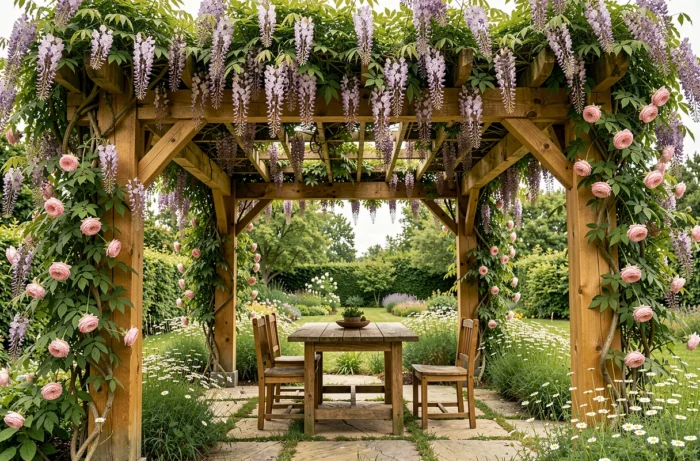
A green pergola provides natural shade in summer and lets light through in winter. We plant it with virgin vine, wisteria, star jasmine, or hops depending on the exposure and desired coverage speed.
The wooden structure (autoclaved pine or douglas) is fixed on concrete footings. We ensure that the posts are spaced sufficiently to avoid blocking circulation. Annual pruning of the climbers is done at the end of winter.
9. Composting area integrated at the back of the garden
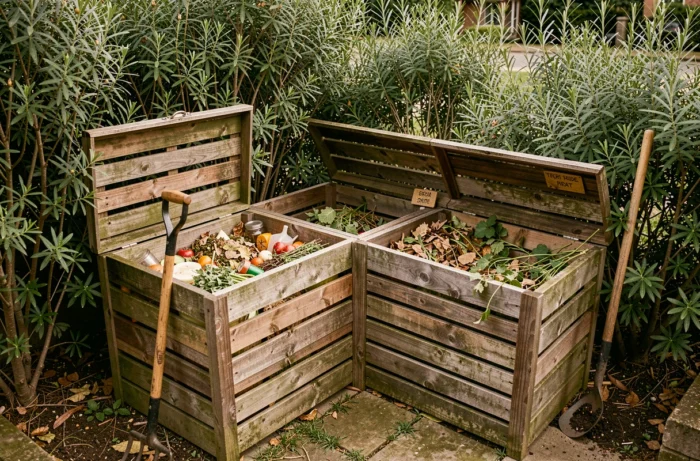
A three-compartment wooden composter (fresh, in progress, mature) transforms green waste and kitchen scraps into free amendment. We place it in partial shade, in direct contact with the soil so that worms can access it.
- First compartment: daily deposit of green material (peelings) and brown material (dry leaves, cardboard)
- Second compartment: actively decomposing material, turned every three weeks
- Third compartment: mature compost, ready to spread at the foot of the plants
10. Low voltage solar lighting to extend evenings
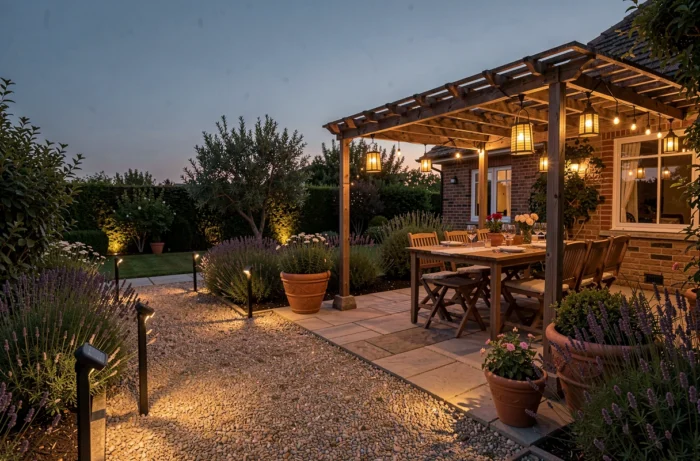
Solar LED bollards mark paths and highlight plants without wiring or electrical consumption. We place them along the stepping stones or at the base of notable shrubs.
The power remains low, preserving nocturnal wildlife. We avoid spotlights aimed at the sky, a source of light pollution. Well-measured lighting structures the garden as much at night as during the day.
Each of these ten ideas adapts to very different terrains. The common thread remains the same: start from the soil, climate, and local constraints before choosing materials or plants. A successful natural outdoor space does not seek to control everything; it works with what is already there.