You have been following a beauty blog for months, you love the product recommendations, skincare routines, and palette tests. One day, you want to ask a specific question, suggest an idea, or simply thank the person behind the articles. Contacting a beauty blog team seems simple, but the chosen channel and the way you formulate your message change everything about the response you will receive.
Contact form and email address: the direct channel of the beauty blog
Most beauty blogs display a contact page accessible from the main menu or the footer. This is the most reliable channel for a specific request, whether it’s a question about a tested product, a topic suggestion, or a collaboration proposal.
The contact form has a subtle advantage: it filters messages by category. If the blog offers a dropdown menu (reader question, partnership, press), choosing the right category speeds up processing. A well-categorized message reaches the right person faster.
Some blogs also provide a dedicated email address. If you choose to go through email rather than the form, be sure to write a clear subject line. A subject like “Question about your article from October 12 – anti-spot routine” will be addressed before a simple “Hello.” For more information about Le Break Beauté, this direct approach via the dedicated page remains the most effective reflex.
Social media: contacting a beauty blogger via Instagram or other platforms
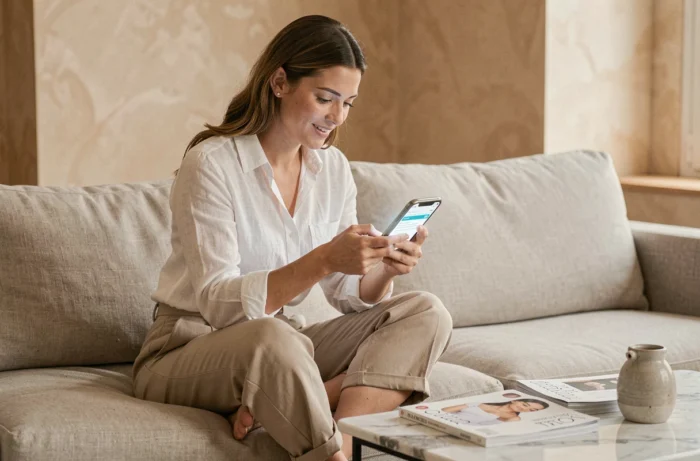
Social media is the second natural entry point. Instagram, in particular, concentrates a large share of exchanges around beauty. Stories, comments under posts, and direct messages (DMs) each offer a different level of interaction.
Public comments or private message
A comment under a recent post is visible to the entire community. It is suitable for a quick remark, a compliment, or a question that might interest other readers. For a personal request or a partnership proposal, a private message is more appropriate.
A concise and personalized DM is more likely to be read than a generic block of text. Mention a specific article or post that you liked. This shows that you are genuinely familiar with the blog’s content, and this simple detail sets you apart from automated solicitations.
Which network to choose
If the blog is active on several platforms, prioritize the one where the team posts most frequently. A beauty blog that is very present on Instagram but less active on Facebook will respond faster on Instagram. Platforms like YouTube also have a community tab or an “About” section with contact details.
Legal framework for initial contact: GDPR and transparency of partnerships
Are you a brand or an agency looking to propose a partnership to a beauty blog? The legal framework has evolved recently, and two points deserve your attention from the first exchange.
Reconstructing a blogger’s email address from public information does not exempt you from GDPR. The CNIL specifies that this practice remains regulated: you must consider the reasonable expectations of the person and inform them of the source of the data used. In other words, the fact that a first name and a domain name are visible does not automatically make sending a commercial email lawful.
The ordinance of November 6, 2024, also clarified the rules of transparency for commercial influence. If you propose a product in exchange for a publication, the commercial intent must be clearly indicated, by mentioning “advertisement,” “commercial collaboration,” or an equivalent suitable for the medium. This point is best addressed from the first message to avoid any misunderstanding.
Another new requirement: decree no. 2025-1137 of November 28, 2025, makes a written contract mandatory once a certain cumulative remuneration threshold is reached. Even sending a free product can constitute a benefit in kind under the DGCCRF if a publication is expected in return.
Writing an effective contact message for a beauty blog
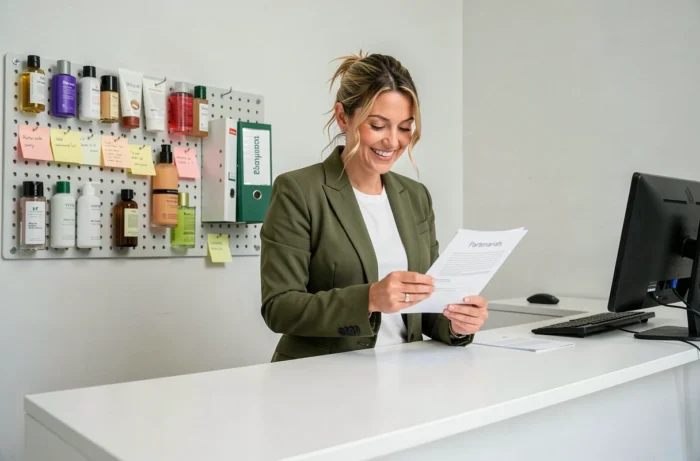
The content matters as much as the channel. Whether you are a reader or a professional, the structure of your message directly influences the response rate.
Here are the elements that make a difference in an initial message:
- A personalized hook: cite an article, a product test, or a specific video from the blog. This proves that you took the time to review the content before writing.
- A subject or a first sentence that summarizes your request in one line. Bloggers sometimes receive dozens of messages a day, and the clearest ones are prioritized.
- A realistic and precise request. Avoid overly broad requests like “tell me which products to buy for my skin.” Ask a targeted question about a topic already covered by the blog.
- If you are a brand, state upfront what you are offering (product shipment, remuneration, event invitation) and what you expect. Transparency from the first contact facilitates the follow-up.
Conversely, certain habits reduce your chances of getting a response. Copy-paste messages sent to multiple blogs without adaptation are immediately recognized. A blogger who receives an email starting with “Dear blogger” without mentioning their name or website understands that the message is generic.
When to follow up and how to respect response times
Beauty blogs are often managed by a single person or a small team. A response time of one to two weeks is common, especially during product launch periods or holidays.
If you do not receive a response after this period, a short and polite follow-up is acceptable. A simple reminder of your initial message, without pressure, is sufficient. Avoid following up on a different channel than the one initially used (sending an Instagram DM after an unanswered email can be perceived as intrusive).
Also, keep in mind that the absence of a response is sometimes a response. Some blogs specify on their contact page that they do not respond to all inquiries, especially requests for personalized advice or link exchanges.
Choosing the right channel, personalizing your message, and respecting the pace of the team on the other side: these three elements are enough to transform a simple email into a constructive exchange with the beauty blog you follow.