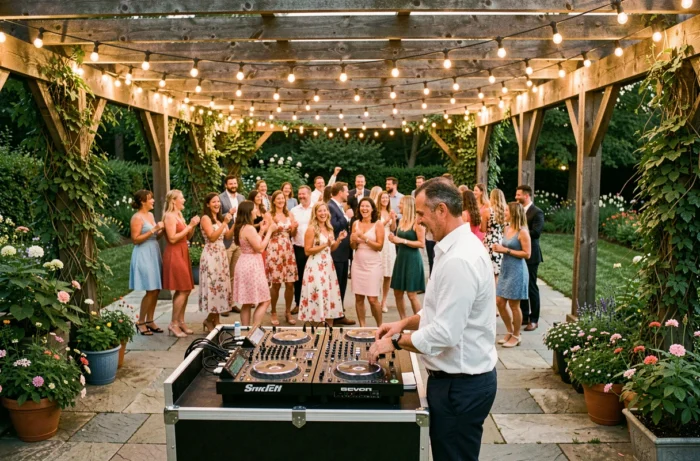
A wedding brings together relatives and friends who don’t know one another, energetic children, tired grandparents and friends who prefer to stay out of the spotlight. Choosing wedding entertainment isn’t just about making a list of activities: it’s about creating an atmosphere where everyone feels welcome, whether they want to dance in the middle of the floor or watch from an armchair.
Accessible wedding entertainment: creating a celebration where no one is left out
Wedding accessibility is often considered in terms of the venue (ramps, lifts, accessible toilets). In reality, accessibility also depends on the entertainment you choose. An activity based solely on spoken announcements excludes guests with hearing loss. A game that requires people to stand for a long time can be difficult for someone with limited mobility—or simply for someone in the final stages of pregnancy.
To plan ahead, you can include an optional question on your invitation or online form about access needs or hearing assistance. Public venues are required to make a public accessibility register available. Checking it before booking lets you confirm what is actually available on site.
In practice, every activity should offer several ways to take part. A quiz about the newlyweds works better when the questions are projected on a screen as well as read aloud over a microphone. A photo booth set at wheelchair height is accessible to everyone. Browsing wedding entertainment ideas on Info Mariage gives you an overview of the formats available, but the real work lies in adapting each idea to the needs of your guests.
Sound levels and evening entertainment: check the legal requirements before booking
French law does not set a universal time after which all music is automatically prohibited. Noise nuisance is assessed based on its duration, frequency and intensity, and can be an issue both day and night. For a reception near homes, it’s best to discuss sound levels in advance with the venue and sound provider.
This constraint directly affects the types of entertainment you can plan for later in the evening. A fireworks display at 11 p.m. at a rural estate surrounded by homes could cause friction or even complaints. Checking local rules and the terms of your rental agreement helps avoid unpleasant surprises on the big day.
Tailor the sound schedule to the venue
If your reception is under a marquee or outdoors, sound carries further than it does in an enclosed room. You could plan a change of pace: lively musical entertainment (karaoke, dancing) early in the evening, followed by quieter activities (team quizzes, a cocktail bar with a headphone-based music quiz) after a certain time.
This isn’t a compromise—it’s an advantage. Guests who are sensitive to noise (young children, older people, neurodivergent loved ones) can enjoy the celebration more when the volume isn’t turned up to the max for six hours straight.
Choose wedding games that work for every kind of guest
You often see the same lists doing the rounds: bouquet toss, musical chairs, newlywed quiz. The problem isn’t the games themselves, but the way they’re scheduled one after another without considering who’s in the room.
Choose activities guests can join at their own pace
The best wedding entertainment is the kind where guests can join in and step away without feeling awkward. Here are some formats that follow this principle:
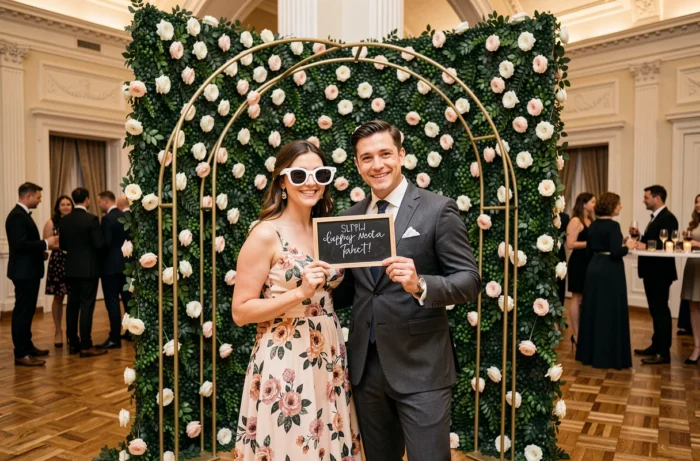
- A Polaroid wall or creative guest book set up in an accessible corner for the whole evening, where guests can stop by whenever they like, without an announcement over the microphone.
- A customization bar (glass engraving, cocktail-making, flower arranging) that runs continuously, with no need to queue.
- A giant board game (such as XXL Jenga or shuffleboard) set out for guests to play freely, naturally drawing in curious guests without pressuring anyone to join.
These formats avoid the awkward moment when an entertainer singles someone out in the crowd. They let introverts take part at their own pace and keep children occupied without needing an adult to supervise them constantly.
Keep the evening lively without overloading it
Two or three highlights are enough. A group game after the drinks reception, an activity during dessert and some dancing in the evening will fill the day without turning the reception into summer camp.
Leaving some time unscheduled is also a form of entertainment. Spontaneous conversations between tables and catching up with old friends only happen if you leave room for them.
Wedding entertainment budget: where to focus your spending
The usual instinct is to book multiple vendors: a photo booth, magician, live band, DJ and host. The result is often an overcrowded schedule and a budget that spirals, with no guarantee that every act will make a lasting impression.
You’ll get better results by focusing your budget on one or two standout elements. A high-quality live band during the drinks reception creates more memories than an average magician paired with an improvised karaoke session. One excellent vendor is better than three mediocre ones.
For everything else, well-planned DIY entertainment works very well:
- A quiz projected on a screen, prepared by the wedding party using anecdotes confirmed with the newlyweds.
- A collaborative playlist where guests can add their songs using a QR code displayed on each table.
- A children’s corner with coloring pages, building toys and a dedicated babysitter, which costs far less than hiring a professional entertainer.
Your choice of entertainment will depend on whether the reception is for fifty or two hundred people, takes place indoors or outdoors, and brings together mostly people in their thirties or four generations. There’s no one-size-fits-all formula. The one constant: couples who ask their guests about their needs in advance and check the venue’s restrictions can plan entertainment that leaves no one on the sidelines.